Schizophrenia Symptom Journal for Safer Next Steps
When thoughts, perceptions, or daily functioning start to feel different, memory can get messy fast. A difficult moment may feel huge one day and hard to describe the next. That is one reason a simple journal can help after a screening result or a period of growing concern.
A journal does not diagnose schizophrenia. It does not prove what caused a change. What it can do is turn scattered experiences into something clearer. That makes it easier to notice patterns, explain what has been happening, and decide when professional support is needed.
A confidential screening tool can be a private first step. A journal helps with the next step. It gives structure to what you are noticing so the information is easier to discuss with a qualified clinician, counselor, or early psychosis team.
Disclaimer: The information and assessments provided are for educational purposes only and should not replace professional medical advice, diagnosis, or treatment.
If symptoms feel severe, become dangerous, or make it hard to stay safe, seek professional help right away. Call 911, go to the nearest emergency room, or call or text 988 for immediate crisis support.

Why a Symptom Journal Can Lower Confusion After Screening
After an online result, many people do one of two things. They either panic and assume the worst, or they dismiss the experience because they cannot explain it clearly. A journal gives a middle path.
Instead of trying to solve everything at once, you record what changed, when it happened, and how much it affected daily life. That makes the experience easier to review later. It also makes it easier to bring a calmer summary into a professional conversation.
A preliminary symptom check is most useful when it leads to better understanding, not more guessing. Journaling supports that goal because it focuses on observation rather than self-diagnosis.
What a Schizophrenia Symptom Journal Can and Cannot Do
A good journal is a record, not a verdict. It should help you track patterns and decide what needs follow-up. It should not push you into labeling yourself from one experience or one online result.
Record Patterns and Impact, Not a Self-Diagnosis
The [NIMH schizophrenia overview] says schizophrenia symptoms generally fall into psychotic, negative, and cognitive categories. NIMH also says people are usually diagnosed between ages 16 and 30 after a first episode of psychosis, while gradual changes in thinking, mood, and social functioning can appear earlier. That matters because a journal should track changes across time, not treat one isolated event as a final answer.
Useful notes often sound simple. Write what happened. Write how long it lasted. Write whether it affected sleep, school, work, conversation, or self-care. Those details are more helpful than trying to decide on your own whether one moment "counts" as schizophrenia.
Know the Signs That Need Urgent Help Now
A journal is helpful when there is time to observe and organize. It is not the right tool for an immediate safety problem. [SAMHSA crisis help guidance] says that if someone is in danger or having a medical emergency, people should call 911 or go to the nearest emergency room. SAMHSA also says people in mental health crisis can call or text 988 to reach a trained crisis counselor.
Stop journaling and get urgent help first if there is immediate danger. Do the same if there is strong fear of self-harm, fear of harming someone else, extreme confusion, or behavior that makes basic safety impossible. You can return to notes later. Safety comes before record-keeping.
What to Write Down After Unusual Thoughts or Perceptions
A symptom journal works best when it stays concrete. You do not need long diary entries. Short, specific notes are easier to review and easier to share.
Note Timing, Triggers, Sleep, and Daily Functioning
Start with facts you can observe. Record:
- What happened, in plain language.
- When it started and how long it lasted.
- What was happening right before it started.
- Sleep changes in the days around it.
- Stress, substance use, or major routine changes.
- Whether school, work, relationships, or self-care felt harder.
- Whether the experience happened once or kept repeating.
These details matter because they show pattern, intensity, and functional impact. A preliminary symptom check can help you reflect on concerns, but a journal shows what those concerns look like across real days and real situations.
Avoid labels such as "I am definitely developing schizophrenia." Write concrete notes instead.
Example 1: Heard whispering when alone for ten minutes before sleep on Tuesday.
Example 2: Missed two classes this week because concentration felt much worse.
Add Family Observations Without Letting Them Override Your Experience
Family or close friends may notice changes that feel hard to see from the inside. They might mention withdrawal, suspiciousness, speech changes, or trouble staying organized. Those observations can help, but they should be labeled clearly in the journal.
One simple method is to keep two lines: what you noticed and what someone else noticed. That way, both perspectives stay visible without turning another person into the sole narrator of your experience.
If family notes increase conflict or fear, keep the focus narrow. Ask for concrete examples, dates, and situations instead of broad judgments. "You skipped dinner three nights this week" is much more useful than "You are acting strange."
How to Bring the Journal to a Professional Visit
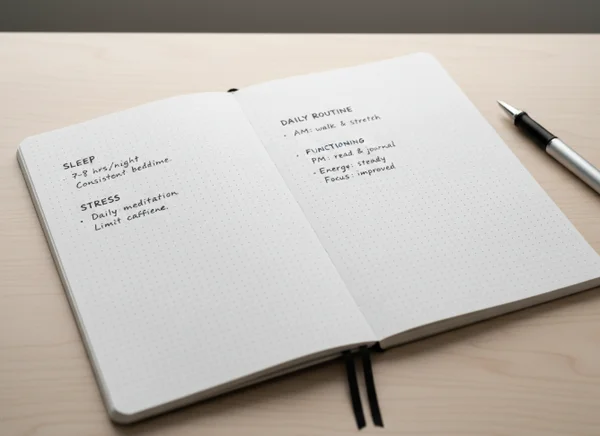
The point of a journal is not to create a perfect document. The point is to make the first appointment easier to use. Clinicians do not need literary detail. They need a clear picture of what changed, how often it happens, and how daily life has been affected.
Summarize the Main Changes and Questions in One Page
Before the visit, condense the journal into one page. Include the top changes, when they started, how often they happen, and what part of life they affect most. Add a short list of questions such as:
- What else could explain these changes?
- What signs should make me seek urgent help?
- Should I be evaluated by an early psychosis program?
- What support should family or roommates know about?
NIMH says coordinated specialty care for first episode psychosis includes psychotherapy, medication, case management, employment and education services, and family education and support. NIMH also says CSC is more effective than typical care in reducing symptoms and improving quality of life. SAMHSA's [Early Serious Mental Illness Treatment Locator] describes itself as a confidential and anonymous source of information for people and families looking for treatment after a recent onset of serious mental illness. That can help if you need to find a program after a first evaluation.
Use the Online Test as Context, Not as the Final Answer
Bring your screening result as context, not as proof. A clinician may find it helpful to know what led you to a self-assessment and what concerns stood out. The result can open the conversation, but it should not close it.
An online self-assessment summary works best beside your symptom notes, medication list, major health changes, and questions. Together, those pieces tell a more useful story than a score alone.

Use the Journal to Prepare for Support, Not to Go It Alone
A symptom journal is not about watching yourself with constant fear. It is about reducing confusion and making the next conversation clearer. If the notes show repeating changes, rising distress, or falling daily function, that is a reason to reach out, not a reason to keep testing yourself in private forever.
Used well, the journal becomes a bridge. It connects a private first step with real support, better questions, and safer follow-up. That is the most helpful role it can play.
Schizophrenia Symptom Journal
How long should I keep a symptom journal?
Long enough to show a pattern, not so long that journaling becomes a substitute for help. If symptoms are distressing, persistent, or affecting safety or daily function, reach out sooner rather than waiting for a "perfect" record.
Should I include family observations in the journal?
Yes, if they are concrete and respectful. Label them clearly as another person's observation so they add context without replacing your own description.
Should I retake a schizophrenia test every day while journaling?
Usually no. Repeated testing can increase anxiety without adding much clarity. It is often more useful to track real-world patterns, then discuss the journal and any screening result with a qualified professional.