Schizophrenia & Inheritance: Understanding Genetic Risk and Your Free Schizophrenia Test
Watching a loved one manage schizophrenia or worrying about your own mental health can bring up a profound and anxious question: is schizophrenia inherited? The fear that it might be passed down through generations is a heavy burden, leaving many to wonder about their own future or the well-being of their children. How much does family history really matter? While genetics certainly play a significant role, they are only one part of a very complex picture. This article will help you understand the relationship between genes, family history, and schizophrenia, providing clear, supportive guidance.
If you are feeling uncertain about certain thoughts or experiences, understanding your personal risk factors is a responsible first step. You can begin to explore these concerns with a free schizophrenia test that is both confidential and completely free.
Understanding Schizophrenia's Genetic Link
Researchers have long studied the connection between schizophrenia and genetics. They have confirmed that the disorder can run in families, but it doesn't follow simple inheritance patterns like eye color. Instead, it involves a complex interplay of multiple genes, each contributing a small amount to the overall risk. Think of it less as a single switch being flipped and more like a combination of factors that increase a person's vulnerability.
It's important for you to know: having a genetic predisposition doesn't mean a diagnosis is inevitable. Many people with a family history of schizophrenia never develop the disorder, while some people with no family history do. This shows that while genes can load the gun, environmental factors often pull the trigger.
How Likely is Schizophrenia If a Family Member Has It?
Understanding your hereditability risk can provide context, but remember these are just statistics, not certainties. The risk for schizophrenia in the general population is about 1%. However, if you have a first-degree relative (like a parent or sibling) with the disorder, that risk rises to about 10%. If an identical twin has schizophrenia, the other twin has about a 40-50% chance of developing it.
While these numbers show a strong genetic link, they also prove that your genes are not the whole story. Even with identical genes, there is still a 50% chance the other twin will not develop the disorder. This is a powerful reminder that other influences are at play.
Genetic Predisposition vs. Certainty: What Does It Mean?
Having a genetic predisposition simply means you carry certain genetic variations that are more common in people with schizophrenia. It does not seal your fate. This difference is key to easing your worries about family history. Your genetic makeup might make you more sensitive to certain environmental or psychological stressors.
Knowing you have a predisposition can be empowering. It allows you to be more proactive about your mental health, focusing on protective factors like stress management, a healthy lifestyle, and seeking early support if you notice concerning symptoms. It's about awareness, not a life sentence. If you're looking for a starting point, our confidential schizophrenia test can help you organize your thoughts and symptoms.
Family History and Your Schizophrenia Risk Factors
A family history of schizophrenia is considered a significant risk factor, but it operates within a broader context. Your personal risk is a combination of your genetic background and your life experiences. Researchers are increasingly focused on this gene-environment interaction, as it seems to hold the key to why some people with a genetic risk develop the condition while others do not.
Understanding this connection can help take the mystery out of why the illness starts. It moves the conversation away from blame or fear and toward a more holistic view of mental health that includes biology, environment, and psychology.
Key Environmental Triggers That Interact with Genetics
Several environmental triggers have been identified that can increase the risk of schizophrenia, especially in genetically vulnerable individuals. These triggers can occur at different life stages, from before birth to early adulthood.
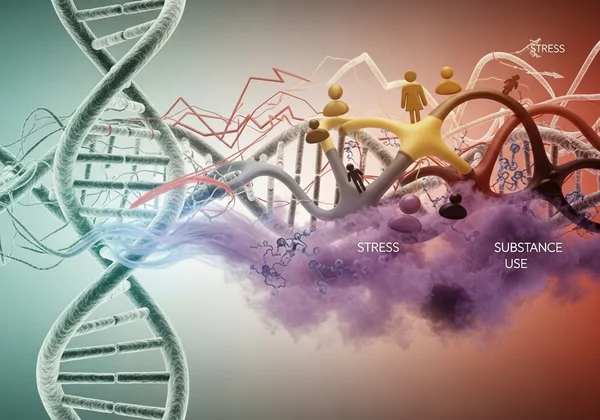
Some of the most studied environmental factors include:
- Prenatal Complications: Issues during pregnancy like malnutrition, infections (such as the flu), or extreme stress can impact fetal brain development.
- Childhood Trauma: Experiences of abuse, neglect, or significant adversity during childhood can have a lasting impact on brain chemistry and stress response systems.
- Substance Use: The use of psychoactive drugs, particularly heavy cannabis use during adolescence, has been strongly linked to an increased risk of developing psychosis.
- Social Stressors: Factors like living in a dense urban environment, being a migrant, or experiencing social discrimination can also contribute to overall risk.
The 'Two-Hit' Hypothesis: Genes and Environment Combined
The gene-environment interaction is often explained by models like the 'two-hit' hypothesis. The first 'hit' is the genetic predisposition you are born with. This initial vulnerability may not cause any issues on its own.
A second 'hit,' typically an environmental or psychological stressor occurring later (often in adolescence or early adulthood), can then trigger the onset of symptoms. This model helps explain why symptoms often emerge during the late teens and early twenties, a period of significant life changes and stressors. This framework empowers individuals by highlighting the importance of managing stress and creating a supportive environment.
Schizophrenia Genetic Testing: Can It Replace a Schizophrenia Test?
With advancements in genetic science, many people wonder if there is a definitive schizophrenia genetic test. Currently, the answer is no. While researchers have identified numerous genes associated with an increased risk, there isn't a single gene or a simple panel of genes that can confirm or deny whether someone will develop schizophrenia.
The genetic roots of the disorder are simply too complex. Hundreds, if not thousands, of genetic variations contribute, each with a very small effect. Because of this, a genetic test cannot provide a simple "yes" or "no" answer. Understanding this can help you focus on more practical and effective steps for managing your mental health concerns.
Current Limitations and Ethical Considerations of Genetic Tests
The primary limitation of genetic tests for mental health is their lack of predictive power. At best, they can indicate a slightly elevated statistical risk, which is often not useful for an individual and can cause unnecessary anxiety.
Furthermore, there are ethical considerations. A test result indicating high genetic risk could lead to discrimination or intense psychological distress without offering any clear preventative actions. For now, medical experts agree that the risk of causing anxiety and discrimination from these tests outweighs their limited benefits.
Preparing for Your Doctor: Using a Preliminary Schizophrenia Test
Your most valuable step is to discuss your concerns and family history with a qualified professional. A doctor or therapist can conduct a thorough diagnostic process based on your symptoms, experiences, and personal history. They can provide an accurate assessment and guide you toward appropriate support and treatment if needed.
Talking to a professional allows for a nuanced conversation that statistics and genetic tests cannot provide. They can help you understand your unique situation and create a plan to protect your mental wellness. Preparing for this conversation can be daunting, but using an online tool like our free schizophrenia test can help you structure your concerns.

Your Next Steps: Understanding Genetic Risk & Seeking Support
The question "Is schizophrenia inherited?" does not have a simple answer. While genetics and family history are undeniable risk factors, they are not a guarantee. Your life experiences, environment, and personal choices play a crucial role in shaping your mental health journey.
This knowledge is meant to empower you, not frighten you. It highlights the importance of self-awareness and proactive mental health care. If you have concerns about your thoughts, feelings, or behaviors, acknowledging them is a brave and important first step. You can take our schizophrenia test to understand your symptoms in a private, secure environment on our website. This initial exploration can provide valuable insights and prepare you for a conversation with a healthcare professional. Remember, seeking clarity is a sign of strength, and support is available.
Frequently Asked Questions About Schizophrenia Genetics
Is schizophrenia inherited from the mother or father more commonly?
No, there is no clear evidence that you're more likely to inherit schizophrenia from your mother or your father. The genetic risk is associated with the genes themselves, not the parent they come from. What matters is whether a first-degree relative has the disorder, regardless of whether it's your mother or father.
What tests confirm schizophrenia, especially regarding genetics?
Currently, no blood test for schizophrenia or genetic screen can confirm a diagnosis. Instead, a qualified mental health professional makes a diagnosis through a comprehensive psychiatric evaluation. This involves discussing your symptoms, personal history, and experiences, and ruling out other medical conditions that could cause similar symptoms.
Can you prevent schizophrenia if it runs in the family?
While you cannot change your genes, you can take proactive steps to reduce your risk and promote mental wellness. This includes managing stress, avoiding illicit substances (especially cannabis during teen years), maintaining a healthy lifestyle with good sleep and nutrition, and building a strong social support system. Early intervention is key, so if you have concerns, it's wise to explore your concerns and speak with a professional.
How does schizophrenia typically start off in individuals with a genetic risk?
In individuals with a genetic risk, schizophrenia often begins with a prodromal period during adolescence or early adulthood. Symptoms can be subtle and may be mistaken for typical teenage behavior. These early signs might include social withdrawal, a decline in school or work performance, trouble concentrating, and changes in emotions or perceptions. Recognizing these early signs is crucial for seeking timely help.