Is Schizophrenia a Personality Disorder? Facts vs. Myths Explained
If you are trying to understand the changes you see in yourself or a loved one, the terminology can be incredibly confusing. You might see signs of withdrawal, strange beliefs, or emotional shifts, leading you to wonder: is schizophrenia a personality disorder?
The short answer is no. Schizophrenia is classified as a psychotic disorder, not a personality disorder. However, the confusion is understandable. The symptoms often overlap with certain personality disorders, and popular media frequently mixes up these conditions. Gaining clarity on this distinction is the first step toward reducing anxiety and finding the right support.
If you are unsure about the symptoms you are experiencing, taking a preliminary online schizophrenia test can help you identify patterns and better understand your mental health journey.
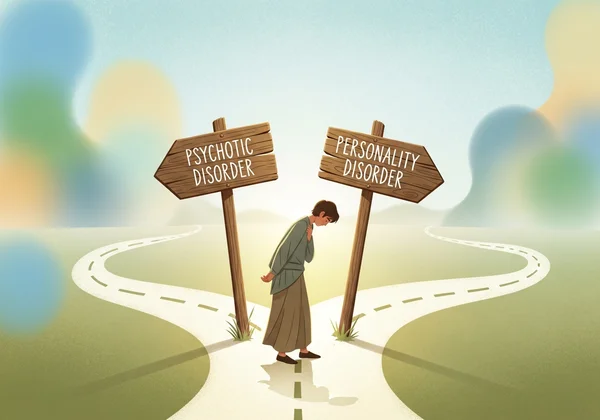
The Core Distinction: Psychotic Disorder vs. Personality Disorder
To understand why the answer to "is schizophrenia a personality disorder" is no, we need to look at how medical professionals categorize these conditions. They belong to two distinct families of mental health challenges, even though they can sometimes look similar on the surface.
Defining Psychotic Disorders: A Break from Reality
Schizophrenia is the most well-known psychotic disorder. The defining feature of a psychotic disorder is a disconnection from reality. This doesn't mean the person is "gone"; it means their brain processes reality differently.
When someone asks, is schizophrenia a psychotic disorder, the answer is a definitive yes. This classification involves specific experiences:
- Hallucinations: Seeing or hearing things others do not.
- Delusions: Firmly holding beliefs that contradict evidence.
- Disorganized Thinking: Difficulty connecting thoughts logically.
Defining Personality Disorders: Ingrained Behavioral Patterns
In contrast, a personality disorder is characterized by enduring patterns of inner experience and behavior. These patterns are deeply ingrained and affect how a person perceives themselves, others, and events.
When asking what is a personality disorder, think of it as a rigid style of interacting with the world. It typically involves:
- Inflexibility in social relationships.
- Intense or unstable emotional responses.
- Difficulty controlling impulses.
- Distorted self-image.
While a personality disorder affects how you relate to reality, a psychotic disorder like schizophrenia affects what you perceive as reality.
Why People Get Confused: Schizophrenia vs. Multiple Personality (DID)
One of the most persistent myths is that is schizophrenia a multiple personality disorder. This misunderstanding stems largely from movies and TV shows that inaccurately portray mental illness.
The "Split Mind" vs. "Split Personality" Misconception
The word "schizophrenia" comes from Greek roots meaning "split mind." However, this refers to a split from reality or a fragmentation of mental functions (like thoughts and emotions not matching up). It does not mean a split in personality.
If you are wondering is schizophrenia a multiple personality disorder, you are likely thinking of Dissociative Identity Disorder (DID). DID involves the presence of two or more distinct personality states (alters). Schizophrenia does not involve multiple personas; it involves one single personality that is struggling to process reality cohesively.
Key Differences: Identity Fragmentation vs. Reality Detachment
To clear up the confusion between is multiple personality disorder a type of schizophrenia, review this comparison:
- Schizophrenia: You know who you are, but you might hear voices coming from outside or inside your head that aren't real. You may believe people are watching you.
- DID (Multiple Personality): You may experience memory gaps (amnesia) and feel like different people control your behavior at different times.
Fact Check:
- Myth: People with schizophrenia have different personalities.
- Fact: They have one personality but experience psychosis.
- Myth: Schizophrenia is the same as DID.
- Fact: They are entirely different diagnostic categories.
The "Schizo" Spectrum: Schizotypal Personality Disorder
The confusion becomes valid when we look at the "Schizophrenia Spectrum." There is a specific condition called Schizotypal Personality Disorder (STPD). Because the names sound so similar, many people naturally ask: is schizophrenia a personality disorder of this specific type?
Understanding the Schizophrenia Spectrum
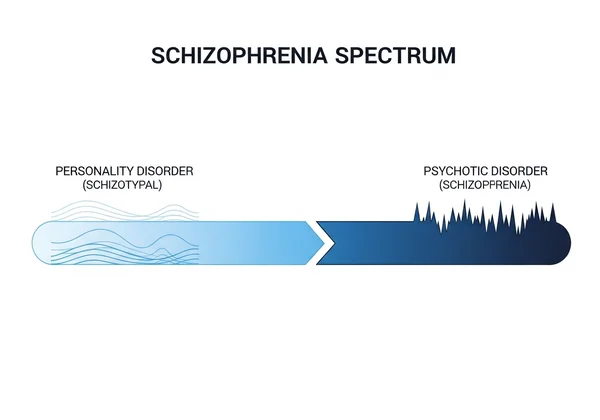
Schizophrenia and Schizotypal Personality Disorder are genetically related. They exist on a spectrum. You can think of Schizotypal Personality Disorder as a "lighter" or "milder" version that sits in the personality disorder category.
People with Schizotypal Personality Disorder often exhibit eccentric behavior, odd beliefs, and social anxiety, which are also seen in schizophrenia. This is why researchers study schizophrenia personality traits to understand the link between the two.
Comparing Severity: Why Schizotypal is not "Full" Schizophrenia
The main difference lies in the intensity and duration of psychosis.
-
Reality Testing: People with Schizotypal Personality Disorder may have "odd" ideas (like believing in telepathy or having magical thinking), but they generally know what is real. They do not typically experience full-blown hallucinations.
-
Psychosis: In schizophrenia, the loss of contact with reality is severe and often requires medication to manage.
Recognizing the Signs: Beyond Personality Traits
If you are worried about yourself or a family member, you might be looking for a checklist of schizophrenia personality disorder symptoms. While that search term mixes two conditions, the intent is clear: you want to know what the warning signs look like.
Positive Symptoms: Hallucinations and Delusions
In clinical terms, "positive" doesn't mean good; it means symptoms that are added to the person's experience.
- Hearing voices: The most common hallucination.
- Paranoia: Believing the government or neighbors are spying on you.
- Grandiosity: Believing you have special powers or are a famous figure.
Does Schizophrenia Change Your Personality? (The Negative Symptoms)
This is a crucial question. Family members often say, "He’s not the same person anymore." While the answer to "is schizophrenia a personality disorder" is no, the condition does impact personality expression through what are called "negative symptoms."
Negative symptoms refer to capabilities that are lost or reduced:
- Flat Affect: The face becomes expressionless; the voice lacks tone.
- Social Withdrawal: A sudden loss of interest in friends and hobbies.
- Avolition: A severe lack of motivation to do basic tasks like showering or eating.
These signs are often mistaken for laziness or depression, but they are core components of schizophrenia.
Gaining Clarity: The Role of Self-Assessment
Reading through these symptoms can be overwhelming. You might recognize the social withdrawal of a personality disorder but also the "odd thoughts" of the schizophrenia spectrum. It is normal to feel anxious when trying to decode these medical terms.
Why Insight is the First Step to Help
Understanding whether your experiences align more with a mental or personality disorder is a powerful step toward feeling better. You do not have to figure this out alone, and you definitely shouldn't rely on guesswork. Gaining objective insight helps you communicate better with doctors and therapists.
Try Our Free Schizophrenia Screening Tool
If the distinctions above resonate with your experience—especially the mix of social withdrawal and changes in perception—it may be helpful to use a structured tool.
We offer a confidential resource designed to help you spot the patterns discussed in this article. It is not a diagnosis, but it is a valuable way to organize your observations. Take the free schizophrenia test to gain a clearer perspective on your symptoms today.
Moving Forward with Understanding
So, is schizophrenia a personality disorder? No. It is a chronic mental health condition defined by psychosis. However, because it shares genetic roots with Schizotypal Personality Disorder and is often confused with DID, understanding the nuance is vital.
Recognizing that schizophrenia is a medical condition—not a character flaw or a "split personality"—can reduce the stigma and fear surrounding it. Early intervention is the most effective way to manage symptoms and lead a fulfilling life.
If you or a loved one are experiencing hallucinations, severe paranoia, or a complete break from reality, please seek professional medical help immediately. For those in the early stages of questioning, education and self-awareness are your best tools.

Frequently Asked Questions
Is schizophrenia a mood disorder like Bipolar?
No, schizophrenia is a psychotic disorder. While people with schizophrenia can experience mood swings, the primary feature is a disconnect from reality. Bipolar disorder is primarily a mood disorder characterized by extreme highs (mania) and lows (depression). However, there is a condition called Schizoaffective Disorder that combines symptoms of both.
Can you have both schizophrenia and a personality disorder?
Yes, it is possible to have both. This is known as comorbidity. For example, a person could be diagnosed with both schizophrenia and Paranoid Personality Disorder. Diagnosing this requires a skilled psychiatrist because the symptoms often overlap.
Is schizophrenia genetic?
Genetics play a significant role. If you have a close family member with schizophrenia, your risk is higher than the general population. Interestingly, this genetic vulnerability also applies to Schizotypal Personality Disorder, reinforcing the "spectrum" connection.
Can a personality disorder turn into schizophrenia?
Generally, no. Personality disorders and schizophrenia are viewed as separate trajectories. However, some adolescents who are later diagnosed with schizophrenia may show early signs that look like a personality disorder (such as extreme social withdrawal or odd behavior) during the "prodromal" (pre-onset) phase.
If you are concerned about these early warning signs, don't wait. Take the schizophrenia test to see if your symptoms suggest a need for professional evaluation.