Grounding Techniques for Psychosis & Schizophrenia: Calm Overwhelming Thoughts and Identify Early Signs
Feeling overwhelmed by confusing thoughts or sensations? You're not alone. When your own mind feels like a frightening and unpredictable place, finding a moment of calm can seem impossible. This guide is here to offer practical, immediate grounding techniques for psychosis and similar experiences. These methods can help you manage acute distress and anxiety, providing a sense of stability. These techniques can offer immediate coping skills and a clearer mind, helping you consider the next steps, such as understanding your symptoms better or exploring a schizophrenia test.
What Are Grounding Techniques & Why Are They Essential?
When you feel disconnected from reality, grounding pulls you back to the present moment. It anchors your awareness in the here and now, using your senses to interrupt distressing thoughts. For those with psychosis-like symptoms, these techniques are a critical lifeline, offering a bridge to safety and control when your internal world feels chaotic. Grounding helps you pause overwhelming thoughts, creating space to breathe and think clearly.
Understanding "Grounding" for Mental Well-being
Grounding is like dropping an anchor in a stormy sea. While thoughts may swirl, your connection to the present reality holds you steady. It doesn't stop the storm but prevents you from being swept away. This is a fundamental skill for mental well-being when dealing with intense experiences. Focusing on what you can see, hear, touch, taste, and smell reminds your brain that you are physically safe in the current moment.
How Grounding Helps Manage Acute Distress and Psychosis-like Experiences
During acute distress or psychosis, the brain can get stuck in a loop of fear or paranoia. Grounding techniques shift your focus from internal disturbances to neutral, external stimuli. This redirection de-escalates the fight-or-flight response, lowers your heart rate, and reduces the intensity of the experience. It offers immediate relief and empowers you to manage thoughts instead of being controlled by them. While not a cure, it's a powerful tool for self-regulation.

Immediate Relief: Techniques to Calm Overwhelming Thoughts
When you need immediate help, simple techniques are essential. These methods require no special equipment and can be done anywhere. Find what works for you and practice when you're calm, so they become second nature during stress. Here are five effective methods to help you manage overwhelming thoughts.
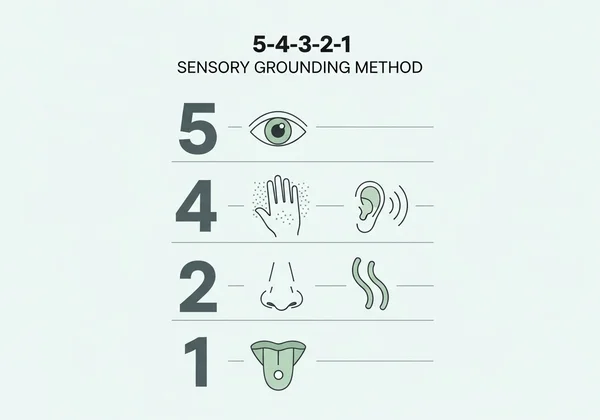
The 5-4-3-2-1 Sensory Grounding Method
This popular sensory grounding technique walks you through your five senses to bring you into the present. It’s easy to remember, even when distressed.
-
5: Name five things you can see around you. Look for small details: a crack in the ceiling, the color of a book, a light reflecting on a surface.
-
4: Acknowledge four things you can touch. Feel the texture of your clothes, the coolness of a tabletop, the weight of your phone in your hand.
-
3: Listen for three things you can hear. This could be the hum of a refrigerator, distant traffic, or your own breathing.
-
2: Identify two things you can smell. Maybe it’s the scent of coffee, soap on your hands, or the air coming through a window.
-
1: Name one thing you can taste. You can take a sip of water, chew a piece of gum, or simply notice the current taste in your mouth.
Mindful Breathing and Body Scan Exercises
Your breath is a powerful anchor. Mindful breathing can calm your nervous system quickly. Sit or lie down comfortably and close your eyes if it feels safe. Place one hand on your belly and notice your breath. Inhale slowly through your nose (count of four), hold (four), and exhale slowly through your mouth (six). Focus on the physical sensation. A body scan involves mentally scanning your body from toes to head, noticing sensations without judgment. This reinforces your connection to your physical self. If you're wondering about your symptoms, a preliminary schizophrenia test can help organize your thoughts before speaking to a professional.
Engaging Your Physical Senses (e.g., Holding Ice, Splashing Water)
Sometimes, a stronger physical sensation is needed to cut through the noise. A strong, safe sensation can be very effective for emotional regulation. Try holding ice and focusing on the intense cold as it melts, or splash cold water on your face. The goal is a compelling physical feeling that demands your full attention, pulling you from distressing thoughts.
Connecting with Your Environment: Observe & Describe
Use your observational skills to anchor yourself. Pick an object and describe it in great detail—its color, shape, size, and material. Saying the descriptions aloud forces your brain to engage with the external world, leaving less mental space for internal distress.
Visualizing a Safe or Calm Place
If your environment feels unsafe, use your imagination. Close your eyes and picture a place where you feel completely safe and at peace—real or imaginary. Use all your senses to build this mental image: what do you see, hear, and smell? Feel the sun or the grass. This mental retreat provides comfort and security, creating a safe space within yourself, an important part of your journey to understanding.
Beyond the Moment: Practical Steps During Psychosis-like Experiences
Grounding techniques are essential for managing acute moments of distress, but a broader strategy is needed for long-term well-being. Thinking ahead can help you feel more prepared and in control when these challenging experiences arise. Here are some practical steps to consider.
When to Use These Grounding Techniques
It's best to use these techniques at the first sign of feeling overwhelmed, anxious, or disconnected. The earlier you intervene, the more effective they are likely to be. Use them when you notice your thoughts starting to race, when you begin to question what is real, or when you feel a wave of intense fear or paranoia. Practicing them regularly, even when you feel fine, helps build the mental muscle needed to use them effectively in a crisis.
Creating Your Personal Coping & Safety Plan
A safety plan is a proactive tool you create. It should list your personal triggers, effective grounding techniques, and contact info for your support network (friends, family, crisis lines). Having this written down removes guesswork when you're in distress.
Why Professional Help is Crucial for Lasting Support
It is vital to understand that grounding techniques are coping mechanisms, not a substitute for professional medical care. They can help you manage symptoms in the moment, but they do not address the underlying causes. If you are experiencing psychosis-like symptoms, seeking an evaluation from a qualified healthcare professional, such as a psychiatrist or psychologist, is a crucial step. They can provide an accurate diagnosis and develop a comprehensive treatment plan. A free online schizophrenia test can be a helpful starting point to gather your thoughts and symptoms before an appointment.

Taking the Next Step Towards Understanding and Support
Learning to manage overwhelming thoughts with grounding techniques is an empowering act of self-care. It provides you with a set of tools to navigate difficult moments with more confidence and control. Remember, these experiences do not define you, and seeking to understand them is a sign of strength.
If you are concerned about your experiences and want to gain preliminary insight, the next step is to gather more information in a structured way. Take our free, confidential assessment to better understand your symptoms. This is not a diagnosis, but it is a responsible and private first step on your path to clarity and getting the support you deserve.
Frequently Asked Questions About Managing Overwhelming Thoughts
Can grounding techniques replace professional help for psychosis or schizophrenia?
No, absolutely not. Grounding techniques are first-aid tools for managing acute distress. They are incredibly valuable for coping in the moment but do not treat the underlying condition. Professional diagnosis and a comprehensive treatment plan from a healthcare provider are essential for long-term management and recovery.
How can I identify early signs of overwhelming thoughts or potential psychosis in myself?
Early signs can be subtle and vary widely. They may include social withdrawal, trouble concentrating, a decline in personal hygiene, new and unusual beliefs, heightened suspicion of others, or sensing things that others do not (like hearing faint noises). If you are concerned about any changes in your thinking or perception, it is always best to seek professional advice.
When should I seek emergency help for severe overwhelming thoughts or psychotic-like symptoms?
You should seek emergency help immediately if you are having thoughts of harming yourself or others, or if you are so disoriented that you cannot care for your basic needs. Go to the nearest emergency room or call your local emergency services number without delay. Your safety is the top priority.
How do I take a preliminary schizophrenia assessment if I'm worried about my symptoms?
If you're ready to explore your symptoms in a private, structured way, you can begin right now. A good first step is to use a confidential online tool. You can try our free tool on our homepage to answer a series of questions based on established screening methods, which can provide you with a preliminary report to better understand your experiences.