Anxiety vs Early Schizophrenia: Key Differences
It's a question many people ask in moments of distress: Is this just anxiety, or could it be something more serious? This confusion is understandable. Both anxiety and the early signs of psychosis, which can be an indicator of conditions like schizophrenia, can feel overwhelming. They can disrupt your life with unusual thoughts and intense feelings. Distinguishing between them is crucial, as they require very different approaches to management and care.
This guide will help you understand the clinical differences between anxiety disorders and early psychosis symptoms associated with schizophrenia. We aim to provide clear, helpful information so you can better understand your experiences. If you are concerned about your symptoms and want preliminary insights, you can always take our free test for a confidential self-assessment.

Understanding Anxiety Disorders and Their Symptoms
Anxiety is a normal human emotion. However, when feelings of intense fear and distress become overwhelming and persistent, they may signal an anxiety disorder. These conditions are among the most common mental health issues worldwide and can significantly affect daily life if left untreated. Understanding their typical manifestations is the first step in differentiating them from other conditions like early schizophrenia.
Physical Symptoms of Anxiety
Anxiety isn't just a mental state; it triggers a powerful physical response. This is often called the "fight or flight" reaction. Common physical symptoms include:
- A racing heart or heart palpitations
- Shortness of breath or a feeling of choking
- Dizziness, lightheadedness, or feeling faint
- Sweating, trembling, or shaking
- Nausea or stomach distress
These symptoms often appear suddenly and can be very frightening, leading some people to believe they are having a heart attack or another severe medical emergency.
Psychological Manifestations
Psychologically, you might experience persistent worry, racing thoughts, and a sense of impending doom. While distressing, these thoughts are typically recognized by the individual as their own, even if they feel out of control.
Some common types of anxiety disorders include:
- Generalized Anxiety Disorder (GAD): Characterized by chronic, exaggerated worry about everyday life.
- Panic Disorder: Involves recurrent, unexpected panic attacks—sudden periods of intense fear.
- Social Anxiety Disorder: An overwhelming fear of social situations and being judged by others.
- Obsessive-Compulsive Disorder (OCD): Features unwanted, intrusive thoughts (obsessions) and repetitive behaviors (compulsions).
Recognizing these patterns is key, as the nature of the worry and the situations that trigger it can provide important clues.
Recognizing Early Signs of Schizophrenia and Prodromal Symptoms
Psychosis is a condition that affects how your brain processes information, causing you to lose touch with reality. Early psychosis refers to the first time someone experiences these symptoms, which can be part of developing schizophrenia. The period leading up to the first episode, known as the prodromal phase, is often marked by subtle changes in thoughts, feelings, and behaviors.
Positive, Negative, and Cognitive Symptoms
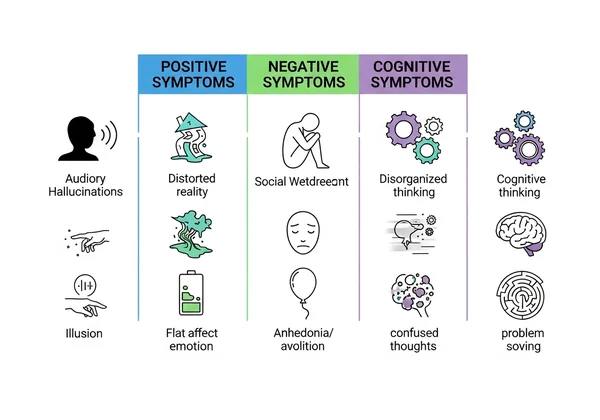
Psychosis symptoms are often grouped into three categories. It's important to remember that "positive" doesn't mean "good." It refers to new experiences that are added to a person's reality.
- Positive Symptoms: These include experiences that are not based in reality. Examples include hallucinations (seeing or hearing things that aren't there), delusions (strong, false beliefs), and disorganized thinking or speech.
- Negative Symptoms: These refer to a reduction or loss of normal functions. Examples include a flat affect (reduced emotional expression), lack of motivation, social withdrawal, and poverty of speech.
- Cognitive Symptoms: These affect thinking processes. A person might struggle with memory, attention, and executive functions like planning and organizing thoughts.
If these symptoms sound familiar and are causing you distress, getting a preliminary check can be a helpful next step. You can always start your assessment for immediate, confidential insights.
The Prodromal Phase
The prodromal phase is the early stage when symptoms are just beginning to emerge but are not yet fully psychotic. This phase can last for weeks, months, or even years. Friends and family might notice changes, but they are often vague and may be mistaken for typical teenage behavior or stress.
Signs during this early phase of schizophrenia can include:
- Increasing trouble with school or work
- Withdrawing from friends and family
- Neglecting personal hygiene
- Expressing unusual ideas or beliefs
- Appearing suspicious or paranoid
- A noticeable decline in overall functioning
Identifying these signs early is critical for seeking timely intervention, which can significantly improve long-term outcomes for conditions like schizophrenia.
Overlapping Symptoms: Where Anxiety and Psychosis Converge
The main source of confusion between anxiety and early psychosis is that they share several symptoms. Intense anxiety can sometimes mimic psychosis, and the onset of psychosis is almost always accompanied by severe anxiety. Let's explore the most common areas of overlap.
Intrusive Thoughts vs. Disordered Thinking
Many people with anxiety, especially OCD, experience intrusive thoughts. These are unwanted, distressing thoughts or images that pop into your mind. However, a person with anxiety typically recognizes these thoughts as irrational and a product of their own mind (ego-dystonic). They find the thoughts disturbing precisely because they conflict with their true beliefs.
In contrast, disordered thinking in psychosis is different. Thoughts may become jumbled, illogical, or fragmented. The person may believe their thoughts are being controlled by outside forces, inserted into their mind, or broadcast to others. This lack of insight is a key feature in conditions like schizophrenia.
Panic Attacks vs. Psychotic Episodes
A panic attack is a sudden, intense surge of fear that peaks within minutes. It involves severe physical symptoms like a pounding heart and shortness of breath, along with a fear of dying or losing control. While terrifying, the person is still connected to reality. They know the fear is extreme but their perception of the world around them remains intact.
A psychotic episode involves a break from reality. The person may experience hallucinations or hold delusional beliefs that feel completely real to them. The distress comes from the content of these experiences (e.g., believing they are in danger), not from an internal sense of panic. While a psychotic episode can be terrifying, the fundamental experience is one of altered reality.
Clinical Differentiation Framework: How Professionals Distinguish Between Conditions
When you see a healthcare professional, they use a structured framework to tell the difference between conditions like anxiety and psychosis. This ensures an accurate diagnosis and the right treatment plan. They don't just look at one symptom; they evaluate the entire picture.
DSM-5 Diagnostic Criteria
Clinicians use the Diagnostic and Statistical Manual of Mental Disorders, 5th Edition (DSM-5). This manual provides specific criteria for diagnosing mental health conditions. For an anxiety disorder, the focus is on excessive worry, fear, and avoidance that are disproportionate to the actual danger.
For a psychotic disorder like schizophrenia, specific criteria must be met. These include the presence of symptoms like delusions, hallucinations, or disorganized speech that persist for a significant period. The key difference is the presence of psychosis—the loss of contact with reality. If you are unsure which category your experiences fall into, an initial screening can help organize your thoughts before speaking with a doctor. Consider using a confidential assessment tool to get started.

Duration and Impact on Functioning
A professional will also ask detailed questions about your symptoms. How long have you been feeling this way? How often do these experiences happen? And most importantly, how are they affecting your life?
Anxiety symptoms, while distressing, may fluctuate with stress levels. Psychosis symptoms, especially in the early stages of schizophrenia, tend to be more persistent and lead to a more noticeable decline in functioning. A person might stop going to work or school, lose interest in hobbies, and become isolated. This severe impact on daily life is a major red flag for clinicians.
When you can distinguish between anxiety and early psychosis, you're taking an important step toward getting the support that's right for you. While anxiety is rooted in fear and worry, early psychosis involves a change in perception that requires specialized care. The overlap in symptoms can be confusing, but your curiosity about what you're experiencing shows your commitment to your wellbeing, and that's a meaningful strength.
If you are still uncertain or concerned, taking a preliminary self-assessment can provide valuable clarity. It can help you organize your experiences before speaking with a professional.
Ready to take the next step? Start your test now. It’s free, confidential, and can provide immediate insights to guide your journey toward getting the right support.
FAQ Section
Can anxiety cause psychosis-like symptoms?
In very rare and extreme cases, severe anxiety or stress can cause brief, transient psychosis-like experiences (sometimes called "micro-psychotic episodes"). However, these are typically short-lived and directly linked to a high-stress event. Unlike a primary psychotic disorder like schizophrenia, these symptoms usually resolve once the intense anxiety subsides.
How long do anxiety symptoms typically last compared to early psychosis?
Anxiety symptoms, like those in a panic attack, are often intense but brief, peaking within minutes. Chronic anxiety (like GAD) can be persistent, but the symptoms may wax and wane. In contrast, the symptoms of early psychosis and its prodromal phase tend to be more stable and often lead to a progressive decline in functioning over weeks or months, as seen in the development of schizophrenia.
What should I do if I can't tell whether my symptoms are anxiety or psychosis?
If you are unable to tell the difference, the most important thing to do is speak with a qualified healthcare professional, such as a doctor or a mental health specialist. They are trained to make an accurate diagnosis. To help you prepare for that conversation, you can use an online screening tool to gather your thoughts. Our free schizophrenia assessment can provide a preliminary summary of your experiences to share with a professional.